Wednesday, March 23, 2011

Chickens: The Bantams

Three years ago, Mr. Farmer agreed to pick up a few baby chicks to amuse a friend's children for Easter. Day old chicks are not easy to come by at that time of year because most reputable breeders want to avoid exactly what we were attempting. Newborn chicks are very fragile and smother easily. A good number of them die on their own, without the assistance of young children who don't know how to handle them. When we located them, we bought twice as many as we needed.

Just before Easter, we set up some eggs for the children to watch. They checked on them over and over. Then, on Easter morning, something amazing happened. The Easter Bunny left a bunch of candy, and the Easter Chicks had hatched out.

Knowing what we do about city children and baby chicks, we prepared a place for them to stay after spring break ended and the children returned to the big city. They had a nice cage with a warming lamp and all the food and water they needed. There was the expected loss, but most of them grew into adulthood and the hens were integrated with our layers (the roosters were relocated). They even laid eggs for a while, but bantams just don't lay as prolifically as those egg-laying machines, the leghorns. 

For nearly three years, the children came to visit when the weather was nice. They took some eggs home with them on most visits and enjoyed them. They fed them and chased them around like they were in a petting zoo. And they argued over which was his, and which was hers, and which was hers.

When the little brown eggs stopped coming, things changed. Our cute little bantams were still sweet and pretty. But they had taken to sitting on the nest almost constantly. They barely came out to eat or drink, and they discouraged the new hens from laying by being in the way. At first we just physically removed them from the nest a few times a day, figuring they would get the hint. Nature got the better of them, however, and we had to separate them to their own cage in the side yard.

It was a good arrangement. There were 2 left alive and well, so they kept each other warm and company. They loved eating the grass and bugs in the yard that the other chickens didn't have access to. We moved the cage every day or two so that they always had fresh grass, and they kept that bit of the yard tidy. They even laid an egg every now and then.

One day last week our nephew came to visit. He took our two remaining bantams on their next adventure. His two daughters, 5 and nearly 3, have taken quite a liking to them. I understand they even take them out of their cage and into the house to play with them. They are house chickens now. They are happily retired as beloved pets. Let's just hope that no stray eggs are found stashed in corners weeks or months after they are laid.
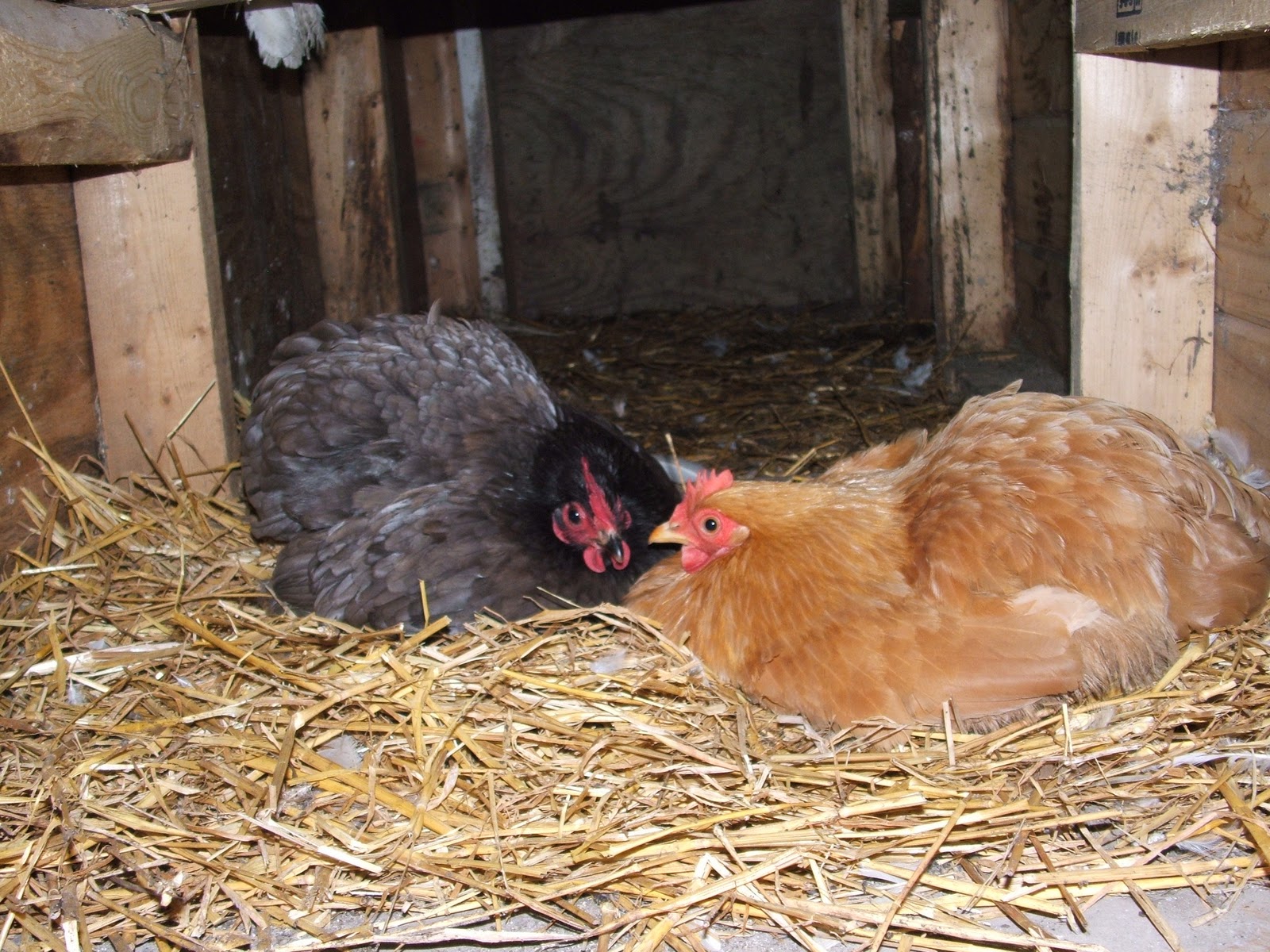

Our Broody Hens
On the Nest, but Not Laying


Tuesday, March 22, 2011

Hillbilly Ingenuity: Cooking Maple Sap

The sap stopped running 2 days earlier than Mr. Farmer's March 15 end-of-the-season projection. By that time we had already started cooking the sap into sweet syrup. It is pretty amazing to think that there is anything other than water in that perfectly clear, barely sweet sap that runs out of the trees like water out of a faucet. For at least hundreds of years, however, people have been boiling or steaming off the water and rendering a delicious treat. The season is just a few short weeks; it takes 40-50 gallons of sap to make a gallon of syrup. That syrup has to last my pancake-loving family a whole year, so I have had to turn down multiple offers from people who wished to buy some. Mr. Farmer says that next year we'll have to tap more trees so that we can share.


Once we had 10 gallons collected, I lost the use of my dining room side server for several weeks. It was occupied by our 18 quart roaster oven. This particular piece of equipment is extremely versatile. We have used it for everything from keeping beans and kraut warm at picnics to roasting a full sized turkey or ham. My mother bought it for Mr. Farmer years ago, and we take great joy and pride in finding new uses for it. This year we used it to slowly steam the water off the sap. The low and slow method assured us of not burning our precious syrup, and it worked like a charm.


Thanks, Mom!
You are now officially an enabler of my husband's eccentricity!
(Sap in the Cooker)


Each day we added a few gallons of sap to the large cooker. To simplify the straining process later, we ran the sap through a coffee filter. Basically we covered the bottom end of a large, clean, plastic funnel with a coffee filter, held it in place by hand, and poured the sap through the funnel. (Yes, our hands got sticky. We had to wash them before AND after.) When the syrup level went down by an inch, we added another gallon. And another. And another. And another. Overnight we turned the heat down and covered it, since we couldn't watch it while we slept.

The first few days were a little disappointing. The level kept going down, so we knew there was evaporation happening, but the liquid remained clear. Mr. Farmer hovered over that cooker like a newborn baby: checking the temperature, stirring, adding more sap, dipping out a jelly-jar's worth to check the color and viscosity, shining a flashlight to see if there was any burnt sugar or sediment on the bottom of the cooker, and of course tasting. Finally, after nearly a week of care and worry, the syrup started to turn golden brown and sweeter.

After some thought and discussion, we decided to just keep one big batch rather than trying to bottle repeatedly during the process. When the sap stopped running and syrup turned dark brown and deliciously sweet, Mr. Farmer started bottling. There was a bit of sediment at the bottom of the cooker. While I am certain that it was maple sugar and not any kind of contaminant, it doesn't make for pretty syrup, so we strained it. Mr. Farmer rigged a funnel with a clean cloth held tight by a rubber band and set it in the mouth of a clean, half-gallon mason jar. He poured the syrup through the cloth/funnel assembly and I put on the lid and ring.

Our yield was just under 2 gallons this year. Keeping in mind that this pure, homemade maple syrup is far thinner than your traditional store-bought, artificial colored and flavored syrup, I figure we have just enough to get us through the year without ever needing to buy any. It pours so fast that I imagine we will use more of it that you would use of corn-based syrup. Plus, it is a little less sweet, so the kids will likely use more on their pancakes and in their oatmeal than they would normally. How sweet it is!


Our First Finished Maple Syrup
March 2011

Monday, March 21, 2011

Life Is Good: First Full Day of Spring

Ah yes, the first full day of Spring. The air is crisp and fresh. The sky is bright. The morning is... wait! What the .... ?!?!?!?!

March 21, 2011
Deer Frolicking in Spring Snow


Snow in March is not completely uncommon here. Several years back on Mr. Farmer's birthday (the 24th) we had 8 inches of snow. It is fleeting, however. In true March Snowstorm fashion, 4 inches of snow fell in less than 4 hours, followed by an hour of sleet and freezing rain. By the evening, as expected, most of the snow was gone. All that is left now is a little wet slush by the roadsides and the memory of one beautiful, if inconvenient, morning.


PS- I took the camera out with me this morning to try to get a pretty shot for the blog. The deer were a complete surprise. I am altogether pleased!

Sunday, March 20, 2011

Life Is Good: Blogging in 2011

"Those who can, do. Those who can't, teach."

When Mr. Farmer says it, he means it as an insult- in spite of the fact that he is frequently both a doer and a teacher. That's OK, though, because the vows that include "love, honor, and obey" do not state "always agree". After all, there are many things that I cannot do, and others that perhaps I'd like to do, and still more that I can do, but choose not to. About these things, instead of teaching, I write.

The blog has been good for me so far. I have always enjoyed writing, but I always thought my life was a bit dull. I never had a knack for inventing stories, either. I do, however, have a small amount of talent for humor and timing. I understand form and format, and my spelling and grammar are above average. Now that I've found a topic that is interesting to some people, I can exercise my skills.

There have been some unintended positive results of the blog as well. Many years ago, Mr. Farmer and I discussed putting together a family cookbook either for posterity or maybe even for profit. The project just never panned out. I even have an folder in my file drawer that contains just two recipes, both of them mine. This blog has a significant cooking section now, and it is turning out to be an excellent start to a project we have been talking about for over 15 years!

I also like the idea of having a record of the things we have done. Some dates could come in handy for comparison for projects that we do year to year, like the garden. I frequently come back here for my pickled egg recipe (which I do not have memorized yet), and maybe next year we won't have to tear the house apart for the Irish Soda Bread recipe. It might be nice to look back at the things we've done with nostalgia. The children could even look back at this one day in the future and think, "I remember the summer that we did that!"

I do most of my writing on Sunday afternoons. The children are out playing with their friends, and Mr. Farmer is taking a break from housework to tinker with this and that. The house is quiet, and I can think. It gives me a nice break from the housework that I usually take over on the weekends so I don't get too exhausted. Sometimes I'll write 3 or 4 entries in a single day, then set them up to post throughout the week to keep things going.

The most fun part, however, is grilling Mr. Farmer for details and following him around with a camera. I'm his own personal Paparazzo. I take my notes, snap my photos, and run back into the house to compose. So, with all respect for my dear husband:

"Those who can, do. Those who can't/won't... WRITE!" 


I'm a Sunset Paparazzo, too.


Friday, March 18, 2011

Gardening: St. Patty's Day 2011

I encountered two of my favorite kinds of green on St. Patrick's Day: I found a $20 bill I didn't know I had, and I saw sprouts in the bulb and herb gardens!

Yesterday was well warmer than it has been in weeks, and I just happened to have the day off work. How could I resist a little time outdoors? The snow had melted away to reveal that the woodpile had taken over the row of hostas that I so lovingly planted last year, so I started by clearing away the wood. I couldn't find a rake to move away the bark, so I busied myself with rebuilding some of the little stone walls that had tumbled down under the weight of the snow. I noticed a sprig of green in the bulb garden, so I moved the fishing poles and rolled away a large, heavy fly-wheel (I think) that had somehow found its way into the bed. I even picked out a large number of acorns that had landed there and were threatening to take root. It was a very rewarding evening's work.

Naturally, I woke up this morning as sore as any overweight, out of shape thirty-something should be after her first day of gardening. So, I took a pill, laid back down for another hour, then rose and bravely faced my day at the office. I can't wait to get back out in the dirt...


My "New" Gardening Gloves
From the St. Patty's Day Gift Basket I won. 


Monday, March 14, 2011

Life Is Good: Hospitality

Having Company was a lot different when I was a kid. Friends had to be announced and approved before they could visit. The house had to be perfect (no small feat with 3 young girls and a dog). Someone joining us for dinner was a very big deal, and it didn't happen often.  Even now, you don't just drop in on the family home. Visiting was an event.

It is a lot different in my home. People stop by all the time without notice. The children have friends over almost daily. Sometimes they split their free time between our house and their friends' houses, even changing locations several times in a Saturday or Sunday afternoon. Friends and neighbors stop in to donate time or food scraps to the cause of our little farm and sometimes come into the house to use the bathroom or share a cup of coffee. I've come to terms with the fact that my friends and their kids do not think less of me when they see the folded laundry still on the dining table or the dishes still drying next to the sink. They wipe their feet at the door just to see the wood chips that frequently surround the wood stove. It is a welcoming home, though not a perfect one.

The other thing that has changed since I was a child is the issue of visiting at mealtimes. Such a thing was unheard of most of the time when I was young. If a friend's mother started setting the dinner table, you excused yourself and left. If you didn't, you were asked to leave. Saturdays and Summer Days were split into two visits: before lunch and after lunch. In my home, however, I stopped sending children home some time ago. Adults never seemed to leave just because it was mealtime, so I just got into the habit of over-cooking. Leftovers make perfectly good lunches if no one happens to be around to eat the extra portion. Growing children often take care of the excess as well. So, if you happen to be hanging around my house at mealtime, expect to be offered food.

Sunday, March 13, 2011

Cooking: Irish Soda Bread

*The Tradition*

For several years, Mr. Farmer has been baking bread for the various covered dish dinners that we attend. It started with a Thanksgiving-themed meal, for which he baked white bread. The following Thanksgiving he was asked to bring bread again. When the following dinner was a St. Patty's-themed corned beef and cabbage dinner (with all the fixin's brought by the attendees), he decided to bake something appropriate for the occasion: Irish Soda Bread. It has always been a hit and a source of controversy. The weekend nearest to St. Patrick's Day always falls during Lent, so the annual argument over whether or not Soda Bread is "sweets" is inevitable. I'm not Catholic, but if I was, I would argue that this quick bread is more of a biscuit than a cake, and therefore is no stumbling block to those who are foregoing sweets for Lent.


**Part One: The Buttermilk Hunt**

The search for a store that carries buttermilk is becoming part of the tradition. The recipe calls for it, but it just isn't something that is common in this area. Fortunately, we found out 2 years ago that one local chain (whose headquarters is in Amish Country) carries their own house brand of buttermilk. Up until a month ago, there were 3 stores of that chain within convenient driving distance, and only one of them carries the precious stuff. This year I made the foolhardy assumption that the largest store in the area would have the best selection. But, alas, while they carried no less than a half-dozen varieties of soy milk (including chocolate!) and lactose-reduced milk, there was no buttermilk to be found. So I made a special trip to that one and only store to get it, and I was not disappointed (except about the fact that I had to go out of my way for it).


***Part Two: The Baking***

Baking anything for a covered dish is an experience. The entire kitchen must be perfectly clean before we can begin. After all, it takes a lot of space (which we do not have) to work on a project that is going to require nearly every dish and utensil in the house and also cover every surface with flour. The previous statement may be an exaggeration, but boy does it feel that way! Most family members must assist in some way. Whether it is by cleaning up dishes, wiping counters, or mopping the floor ahead of time, fetching or combining ingredients during the process, or laying out towels for cooling and wrapping and transporting the finished product, we all have our duties.  In the end, we hold our warm loaves close, like treasured secrets, as we rush to the covered dish dinner... inevitably at the very last minute.


****Part Three: The Recipe****

3 cups      flour
1/4 cups   sugar
1 tbsp       baking powder
1 tsp         baking soda
1/2 tsp      salt
4 tbsp       butter (1/4 cup)
1 cup        raisins (or currants, or both - we use both)
1 1/4 cup   buttermilk
1              egg

Preheat oven to 400 degrees

In a large bowl, combine first 5 ingredients and mix well.

Add butter and mix until butter disappears into dry ingredients.

Stir in raisins and currants.

In a separate bowl, whisk together buttermilk and eggs. Mix into dry ingredients.

Turn dough onto a floured work table and turn into itself several time, then shape into a round loaf. Place loaf on baking pan and cut a cross in the top.

NOTE: Loaf will increase in size by about a 3rd. Keep this in mind when choosing a pan.

Bake 15 minutes at 400 then reduce heat to 350 and cook 15 to 20 minutes more. It is cooked when very brown and toothpick inserted in center comes out clean.


Irish Soda Bread, as baked by Mr. Farmer on 3/12/2011